Clearing the Air
With Air Purifiers
By: Azman Choudhury
Writing For Engineering
City College of New York
Introduction:
Indoor air quality seemingly goes overlooked by the average person when considering
factors that affect their daily health and living environment, despite the fact that we spend most
of our time indoors. Considering your room’s air quality is just as important as keeping your
house physically clean. Air quality, especially indoors, can drastically affect our health. With
pollution and allergens accumulating easily in rooms with poor airflow. Dust, pollen, smoke, pet
hair, mold, and bacteria can easily circulate through and stay in your room, affecting your
respiratory and general health. Luckily, we have a certain piece of technology that helps us keep
our air clean, this being an air purifier. A home air purifier is a device that pulls in air from the
room, filters the contaminants, and then releases that clean air back into the room’s circulation. It
uses a layered filtration system to properly block contaminated particles. But what are these
filters? Where did they come from? What technologies can be found in the purifiers today?.
Background
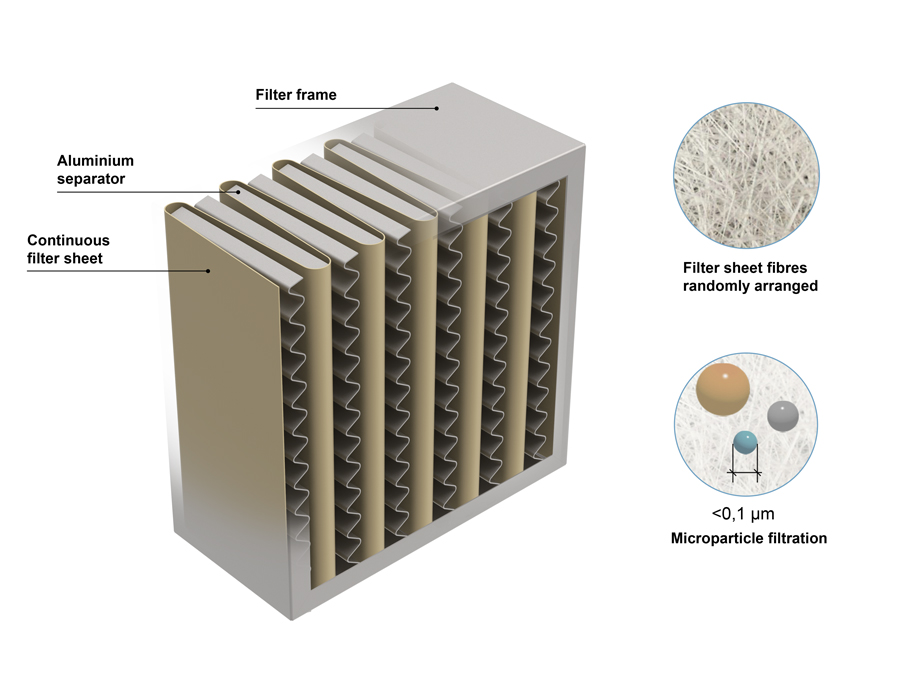
Most Air Purifiers mention that
they are HEPA certified. But what does
this exactly mean? Well, HEPA stands
for High-Efficiency Particulate Air filter. It was a technology first developed
during the 1940s during the Manhattan-A
project to filter and contain the nuclear pollutants in the air. (Britannica 2026) (AIR TECNICS HEPA Figure 1) It uses a dense fiber to filter air. As air passes through it catches large particles and breaks down smaller particles until they are eventually caught on the filter. This allows the removal of 99.97% of air pollutants(EPA 2026). This was later commercialized for the public to use and grew in popularity steadily since. Modern air purifiers now combine HEPA filtration with other technologies such as activated carbon filters, air quality sensors, and adjustable airflow systems.to remove pollutants and improve air quality in homes, medical settings, offices, factory settings, and much more.
Components
Outer Housing
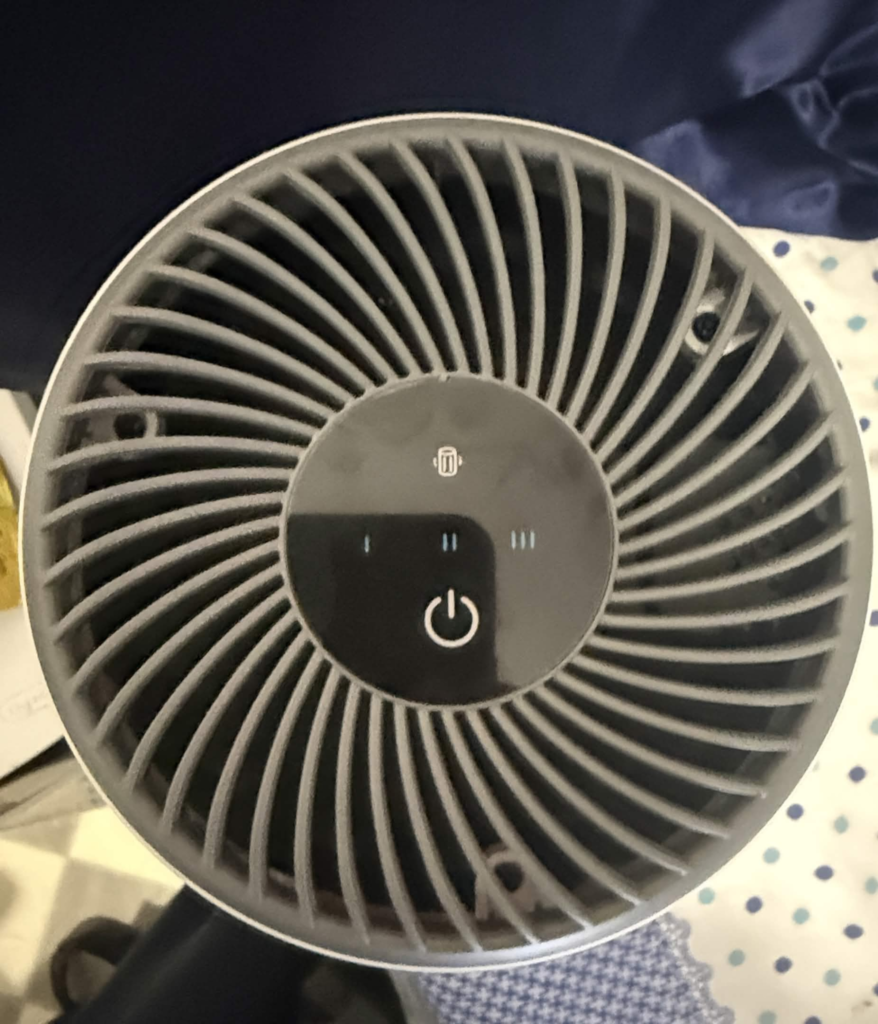
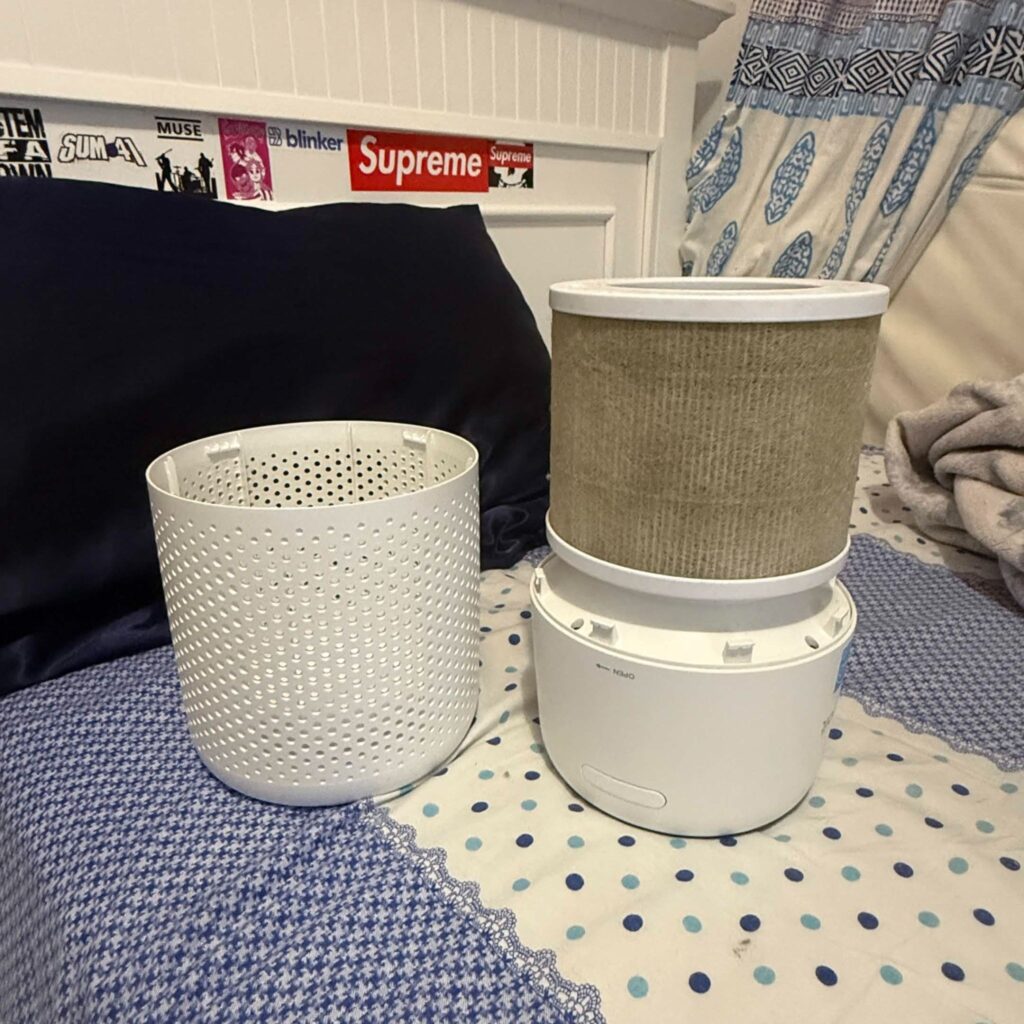
The outer Housing is the body of the air filter. It holds all the components in place. Typically, home purifiers have a plastic shell or a lightweight metal shell that allows longevity while also keeping the device lightweight and portable. The outer shell also directly influences the air that flows into the filter. Most home purifiers have a grill or another panel similar to a grill to suck in the air, allowing it to reach the filter and out the outlet vent. The vents on the purifier are meticulously placed, allowing the proper filtration before releasing the air back into circulation. These shells are usually easily dismantled, allowing the user to change the filters every so often as recommended, as these filters degrade over time. The housing usually contains the controls for the filter aswell, allowing ease of use.
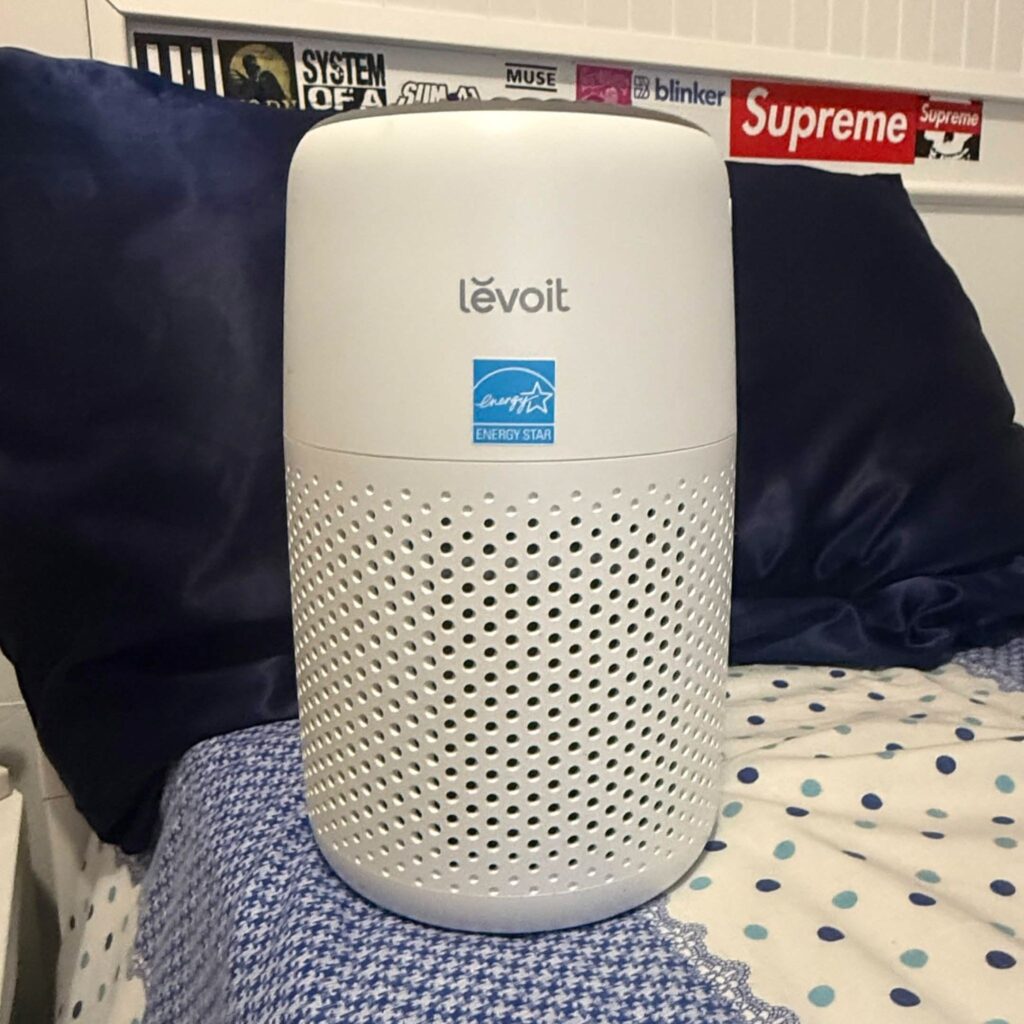
Pre-Filter
The Pre-filter is the first stage of filtration. Capturing the larger contaminants, such as dust, hair, pet hair, and other such contaminants, before they reach the main filtration. This puts less stress on the HEPA filter, increasing its longevity. These pre-filters are usually made from foam meshes catching the large particles with ease. They can also be cleaned and reused, as they primarily catch dust and other visible particles. Overall, the pre-filter system ensures your purifier has a long, healthy lifespan.(Consumer Reports)
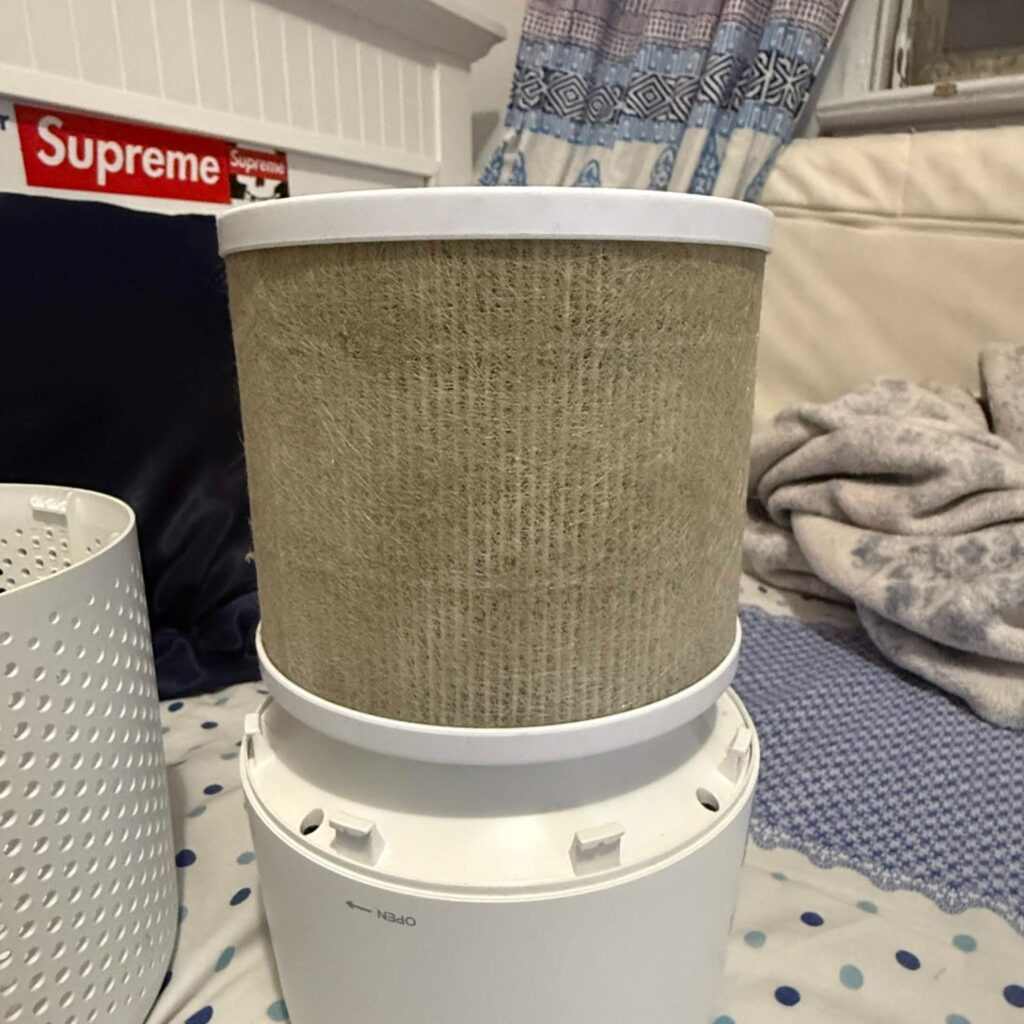
HEPA Filter
The HEPA filter is the primary filtering device used by the purifier. This component filters the extremely small particles that contaminate the air. As mentioned previously, HEPA-certified filters are capable of removing at least 99.97 percent of invisible air pollutants such as mold spores and bacteria. As I said previously, they were originally meant to filter nuclear pollutants, and they did so successfully. That should be reputable enough to show how effective the filter is at removing common airborne pollutants found in living spaces. These filters are so dense that the purifier requires a fan to take in and blow out air. I will discuss the fans’ function in a later paragraph. While the HEPA filter is effective in removing physical pollutants, it lacks effectiveness in reducing odors or gases. Most personal purifiers use another filtration system to help alleviate this.
Activated Carbon filter
The Activated Carbon filters main use is to reduce odors, chemicals, and gases. It does this through a process called absorption. As the name states, molecules attach to the surface of the carbon filter. These filters have millions of little pores that trap chemicals as air passes through. For example If a smoker were to use a purifier that contained a carbon filter, the smoke he let out would attach to the filter’s pores, eliminating the smoke and smell when the clean air is pushed out. These filters lose effectiveness over time, so they require regular maintenance. With all these filtration processes, how does the air travel through the air purifiers?
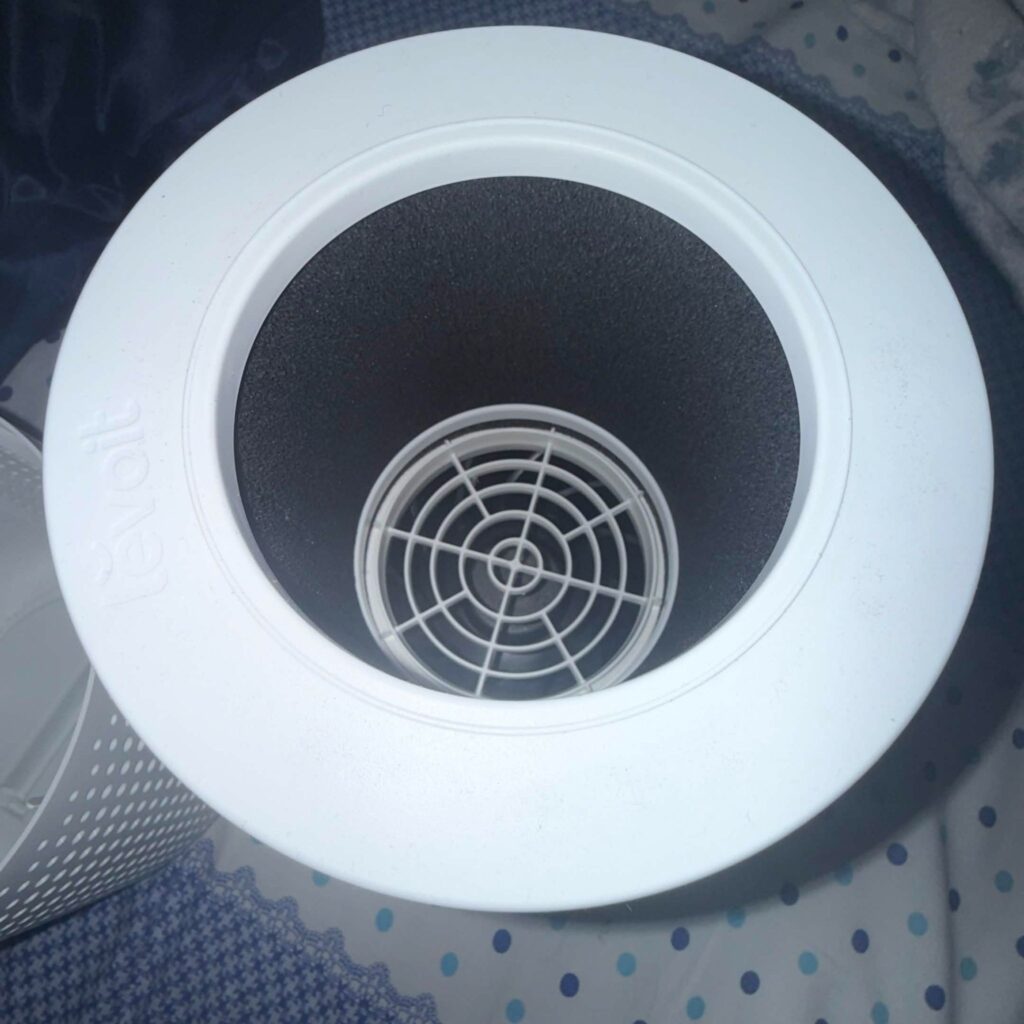
Fan System
The fan system is the most mechanical part of the filter. A powerful fan powered by a motor is responsible for circulating the air in and out of the purifier through the filtration systems. The fan is intelligently placed in the filter, allowing it to not only pull the air but aswell as pushing it out. Most filters just have one big fan that does the intake and outtake. Most modern purifiers allow the user to adjust the fan’s power accordingly; some high-end purifiers do it automatically through air quality sensors.
Air Intake and Outtake Vents
The vents located on the air filter serve a crucial function for the airfilter allowing the air to enter and exit the purifier effectively. This is done by strategic placement. Most intake vents are placed on the side of the purifier. Allowing the fan to suck in the contaminated air to pass through its filter. While the outtake vent is placed on the top of the purifier, this is where the fan blows out the clean air through the top, allowing the cleaner air to spread throughout a larger surface area, depending on the placement of the purifier.
Control Panel
Most Modern Purifiers allow you to directly control the purifier’s strength on a screen or buttons on the purifier. These panels may also include a light for when to change and clean the purifier. Some high-end purifiers allow you to control them with a wireless remote as well. While this component doesn’t have much depth to it. It is nonetheless crucial for Consumer convenience, allowing a simple way to control and maintain your purifier.
Tying it together
Now that the components have been discussed, we can look at how they work together to clear the air. A commercial air purifier continuously circulates air through an intake vent, driven by a powerful fan, through multiple filtration stages, such as the pre-filtration, which uses a foam mesh to catch large particles such as dust. The air then goes through the HEPA, which eliminates most invisible airborne pollutants. It then passes through a Carbon filter, which further filters odors and other chemical gases. The same fan then blows the air out the outtake vent placed on the top, dispersing cleaner, healthier air into the environment
Conclusion:
Air purifiers are an important part of maintaining a clean and healthy indoor environment. They are designed to improve air quality by removing airborne pollutants that may be present in the air. Through a carefully designed system, air purifiers clean the air using multiple filtration stages, allowing them to remove contaminants efficiently while the device is running. As concerns about pollution continue to grow, it has become increasingly important to incorporate air purifiers into households, especially for people living in areas with poor air quality. Understanding how an air purifier works and what its purpose is can be an important step toward maintaining a healthier living space.
REFERENCES
– Figure 1: Airtecnics. ( 2021, February 17). What are HEPA filters and how do they work? (page 1)
https://www.airtecnics.com/news/what-are-hepa-filters-and-how-do-they-work
-Figure 2-6: Photography done by Azman Choudhury
-Consumer Reports. ( 2025, July 31). Air purifier buying guide.(page 3)
https://www.consumerreports.org/appliances/air-purifiers/buying-guide
-Encyclopaedia Britannica. (2026, January 28 ). High-efficiency particulate air (HEPA) filter. (page 1) https://www.britannica.com/technology/high-efficiency-particulate-air-system
-U.S Environmental Protection Agency. (2026, January 13). What is a HEPA filter? (page 2) https://www.epa.gov/indoor-air-quality-iaq/what-hepa-filter
-U.S. Environmental Protection Agency. (2026, February 17). Guide to air cleaners in the home. https://www.epa.gov/indoor-air-quality-iaq/guide-air-cleaners-home

